The Day of Arafah: The Most Powerful Afternoon of Your Year
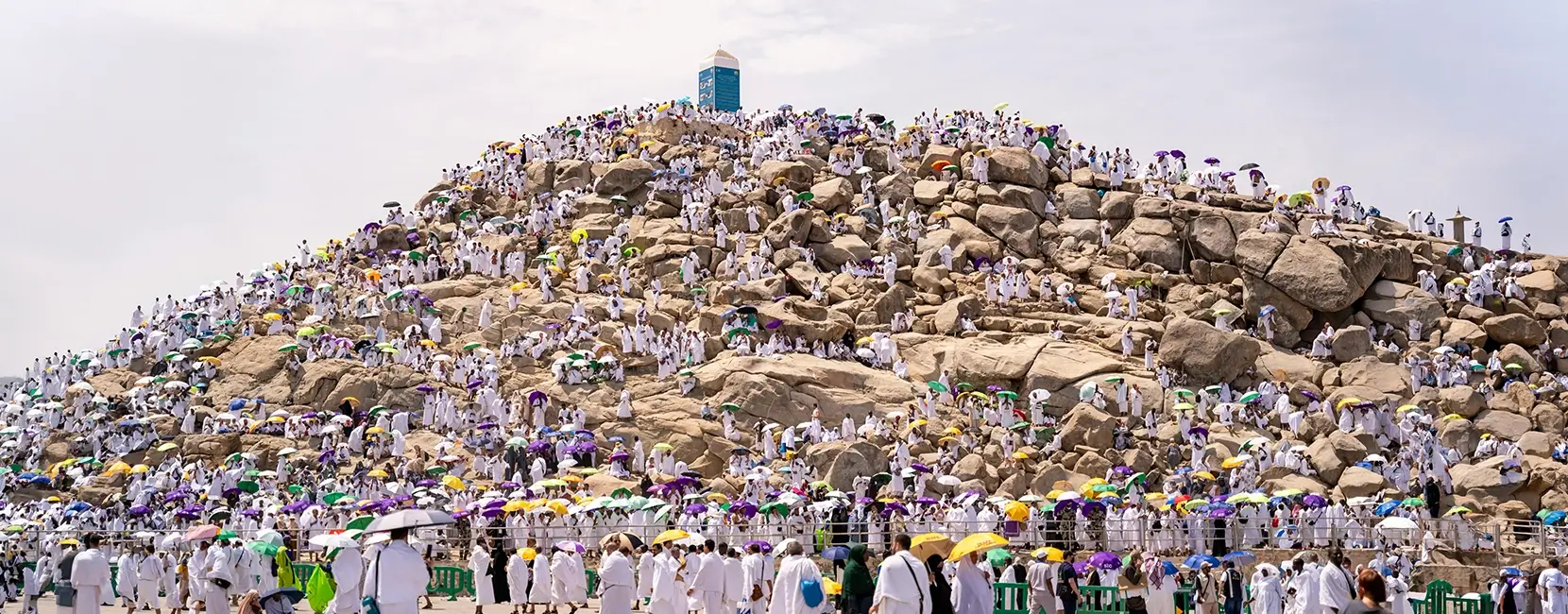
There is a single afternoon in the Islamic calendar where the sky changes, the doors of mercy swing completely wide, and your entire past can be wiped clean.
It is the Day of Arafah - the 9th day of Dhul Hijjah.
While the night of Laylat al-Qadr is hidden during the final stretch of Ramadan, the Day of Arafah is given to us openly. We know exactly when it is, yet many of us let it pass by like any other day.
Whether you are working a normal shift, looking after children, or trying to find peace in a busy home, the afternoon of Arafah is your personal lifeline. It is a moment designed for your heart to find rest and for your prayers to be answered.
To understand why this day feels so heavy with mercy, we have to look at what is happening on the ground in Makkah. Millions of Muslims travel from every corner of the earth to stand together on the plain of Arafah. They leave behind their status, their fine clothes, and their worldly comforts, wearing nothing but simple white sheets, in a spirit of complete submission before the Creator (سُبْحَانَهُ وَتَعَالَى) and in solidarity with the creations.
They stand shoulder to shoulder under the sun, crying out to Allah, admitting their mistakes, and begging for a fresh start. It is a striking preview of the Day of Judgment, but with one beautiful difference: today is a day of absolute forgiveness.
The Prophet Muhammad (ﷺ) described the immense scale of this day:
"There is no day on which Allah frees more servants from the Fire than on the Day of Arafah." — Sahih Muslim
But this mercy isn't restricted to the people standing on that mountain. It extends to you, right where you are sitting today.
You do not need to be in Makkah to receive the gifts of this day. Allah (سُبْحَانَهُ وَتَعَالَى) has given those at home a powerful way to connect to the rewards of the pilgrims.
1. Wipe Out Two Years of Mistakes
The easiest way to honour this day is to fast. When the Prophet (ﷺ) was asked about the reward for fasting on the Day of Arafah, he (ﷺ) said:
"It expiates the sins of the past year and the coming year." — Sahih Muslim
Think about that for a moment. A single day of hunger and thirst can completely erase twenty-four months of human errors, lapses in judgment, and regrets. It is a gift of pure mercy.
2. The Golden Hour: The Afternoon Du'a
As the sun begins to set on the Day of Arafah, the spiritual energy reaches its peak. This is the time to put down your phone, step away from distractions, and make sincere du'a.
Write a list of your worries, your deepest desires, and the people you love. Pour your heart out in the hours before Maghrib. Ask for healing, ask for financial ease, and ask for peace of mind.
To make sure you don't look back at sunset with regret, here is a simple, practical way to structure your day:
Fajr Time
Eat a healthy pre-dawn meal (Suhoor) if you are fasting. Pray Fajr on time, and immediately start reciting the Takbeerat (Allahu Akbar, Allahu Akbar...) after the prayer.
12:00 PM – Midday
The Prophet (ﷺ) advised that fasting is a shield. Avoid gossip, anger, or scrolling mindlessly on social media. Keep your heart light and focused.
3:00 PM – The Afternoon Descent
This is the window where the pilgrims are standing on the mountain. Match their devotion by giving charity. Alleviate someone else's hardship so Allah (سُبْحَانَهُ وَتَعَالَى) may alleviate yours.
2 Hours Before Maghrib: Find a quiet corner. Turn off your phone. Hold your du'a list in your hands and speak to Allah with complete vulnerability until the sun goes down.
On a day when we are begging Allah (سُبْحَانَهُ وَتَعَالَى) to be generous with us, the best way to catch His eye is to be generous to His creation.
Right now, as we prepare our homes for Eid, millions of parents across Pakistan, Africa, Bangladesh, and India are looking at empty pantries. They are praying for a miracle, praying that someone, somewhere, will help them put a proper meal on the table for their children.
By sending a food pack or scheduling your Qurbani on the Day of Arafah, you are becoming the answer to that desperate prayer. You are putting food into a hungry stomach at the exact moment Allah (سُبْحَانَهُ وَتَعَالَى) is looking to forgive His servants.
May Allah (سُبْحَانَهُ وَتَعَالَى) accept all our deeds and be pleased with our efforts, Ameen.
Every Penny Helps Thank you.
View and Share


